Mermay 2023
Mermaids, Tritons, Sirens or the overall class of Sirenia is a vast and wide net of varying aquatic dwelling humanoids. Highly dimorphic, no two species are identical. However one thing you’ll see pretty consistently across the various species of Merfolk is the unique “false face” adaptation.This illusionary facial feature is believed to have evolve as a defense mechanism. The “true eyes” are located on the far side of merfolk heads. While it’s “false eyes” sit where a human’s would. These false eyes are actually highly sensitive receptors used in hunting. They also emit pheromones. Merfolk mouthes appear relatively similar to that of a humans, however it is actually hinged and can extend like that of a fish. It’s mouth filled with tiny serrated teeth.
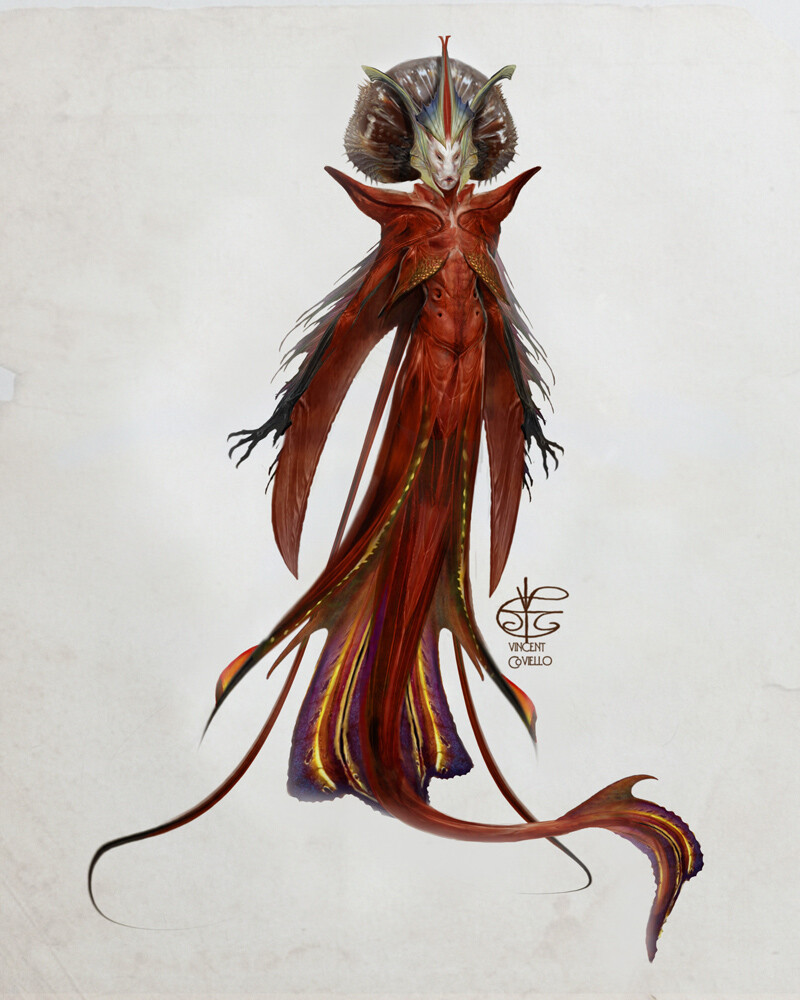
Queen Mermidala. A Mermay meets May the 4th mash up
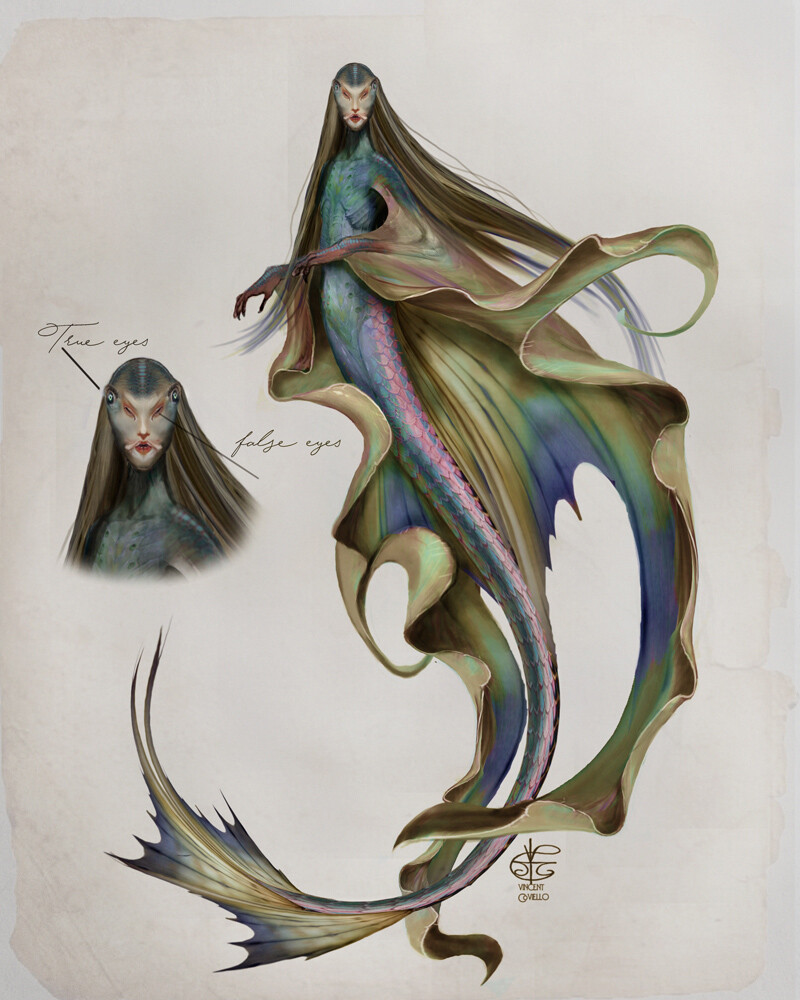
Ribbon tailed Mermaid

Ribbon tailed Mermaid, deep see variant

Winged Pacific Siren
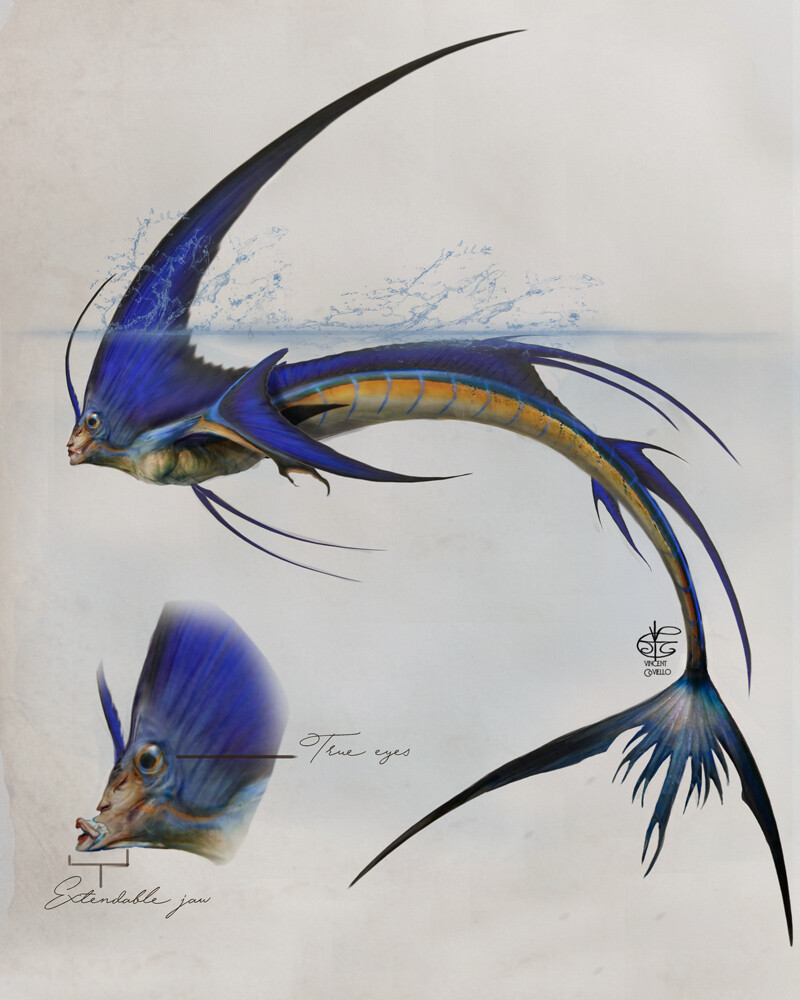
Sailfin Mermaid

Merfolk skull dimorphism

Noted species in the attached diagram
A. Sirenia Atlanticus
B. Sirenia Sphyrnidae
C. Sirenia Tetraodontidae
D. Sirenia Decapodiformes
E. Sirenia Pterois
F. Sirenia Eurypharynx

Mermaids are high complex creatures. An anatomy that seemingly incorporates aspects found in both aquatic mammals and fish. Despite this vast dimorphism, the internal anatomy is largely shared amongst the varying species with some evolutionary adaptations